|
On February 20, 2016, Tropical Cyclone Winston was the first Category 5 tropical cyclone of record to hit Fiji, and it was the strongest tropical cyclone of record in the Southern Hemisphere, with maximum winds over 200 mph. No helicopters came to survey the damage for four days. Aid began to arrive on February 24. The island of Koro in the Lomaiviti Group of Fiji bore the brunt of Cyclone Winston. Houses, especially along the coast, were shattered by cyclonic wind and tsunami-like storm surges. One hundred per cent of the buildings on the island suffered damage as a result of the cyclone and the storm surge that followed, according to the United Nations Office for the Coordination of Humanitarian Affairs. www.unocha.org. Almost 1000 homes on Koro Island were destroyed, 77 per cent of the housing on the island. Carissa Wills-Demello, Peace Corps Volunteer and Community Health Empowerment Facilitator, has served in Nabasovi since 2014. She is building a village chicken coop with the women's group in Nabasovi. She writes, "Cyclone Winston has impacted human and environmental health. Reef fish populations, a historic staple, are suffering and fishing strains this supply further while damaging the reef. "The cyclone resulted in 100% crop loss, robbing villagers of food and the sole source of income. Importing eggs, frozen chicken and sausage from the capital is an expensive and unreliable solution. Women generally fish for their family and rely on their husbands for harvesting farm food and giving them money for imported foods (rice, flour, etc). This is barely an option now given the state of the reef and farms. "Chicken coops are one solution that the women's group has come up with. A group of 5 women along with the local agricultural officer and I will attend a training and construct enough coops to provide eggs for all 45 homes in the village. This will empower the women to improve their family food security, health and economic standing. Eggs will be used for children's meals, bake sales, and extra will be sold. "Women in Fiji give everything of themselves for the health and happiness of their families. The women in Nabasovi are some of the hardest working, most loving people I've ever met. It is my hope that in helping them fund this project they feel appreciated for all they do empowered to take more leadership in family village affairs. "We believe that if done well, this project in Nabasovi will be the catalyst for more on Koro. If you are able, please consider donating." Visit: Happy Chickens for Fiji and please donate.
An emergency response team from the International Red Cross traveling by ship reached Koro, the seventh-largest of Fiji’s 300 islands, on Tuesday evening, February 23, reported One America News Network, www.oann.com. With the help of Fijian and Australian militaries, a huge humanitarian operation swung into action to meet the urgent needs of people living on Koro. United Nations agencies and NGO partners are working with the Fijian Government to provide supplies and technical assistance to improve conditions on the ground. "Hundreds of people have been treated for injuries in makeshift hospital tents. People have food rations for a month but all of the crops are destroyed, so food security will be a challenge moving forward," said Humanitarian Coordinator Osnat Lubrani. Lubrani and the Head of UNOCHA Pacific, Sune Gudnitz attended a community meeting in Koro where local leaders expressed the urgent need for shelter and their desire to see communities relocated to higher ground, reducing future risk from storm surge. Residences close to the seashore in the east-coast villages were washed away in 30-foot storm surge caused by unprecedented strong winds. The timing of the cyclone, during daylight hours, was a blessing the naturally optimistic Fijians are thankful for. "If it struck at night, I think it's a different story altogether," said David Tevita Vunileba from the village of Mudu. "We wouldn't have known it's coming. I can say we are very lucky." www.un.org. Dramatic footage on TV New Zealand shows the cyclone hitting the village of Tua Tua, then everyone abandoning their houses and fleeing to higher ground through the rubble during a brief pause in the 200 mph winds as the eye of the storm passed overhead.
The village of Nasau on the east coast of Koro Island was the first to be devastated by Cyclone Winston. Visit www.abc.net for arial photos before and after Cyclone Winston that portray the extent of damage to the 14 villages on Koro Island.
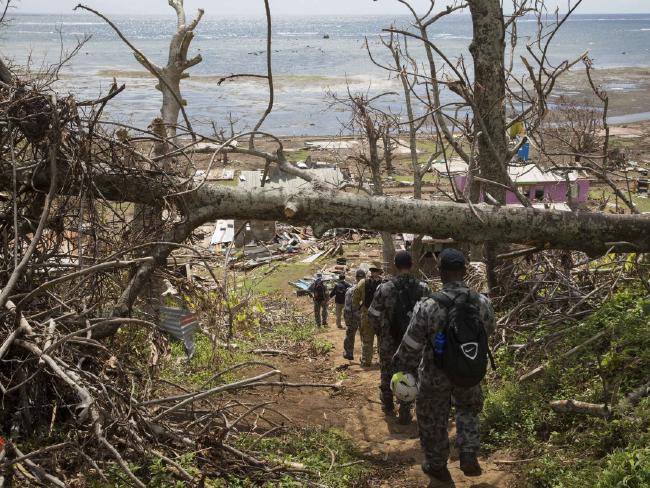
Australian Defense Force personnel arrive at the village of Nasau, Koro Island. Source - pica.tteamvn The Fiji Sun reported on February 24, "Nasau elder and clan leader Viliame Dovu, 76, could not hide his feelings. Shedding tears, he spoke of the fury of the killer cyclone. He confirmed that five people were dead and a child was missing after huge waves swept through Nasau village. Mr. Dovu said the waves snatched four persons and the fifth, an elderly woman, succumbed to injuries she suffered after being hit by trees and flying debris while swimming for safety. Mr. Dovu said Winston laid waste to the village. "We have nothing else left now. The cyclone has destroyed all our future. Our only source of income is copra, yaqona and the land. All these have been destroyed and we do not know how to live life now." More than 400 people live in Nasau, the biggest of the 14 villages on Koro. Nasau is the financial and business hub of the island. It has the Government station and Koro High School. Mr. Dovu confirmed that all 90 houses in the village were destroyed or badly damaged in the cyclone. On March 4, 2016, the Government of Fiji and the United Nations launched an appeal for $38.6 million in critical emergency relief to 350,000 people in need after Cyclone Winston's fury left the island nation "a loss of catastrophic proportions." Winston, the most devastating tropical cyclone on record in the Southern Hemisphere, struck the Pacific island nation on 20 February, taking more than 40 lives and affecting 350,000 people, 40 per cent of the total population. Some 54,000 people remain sheltered in 960 evacuation centers.
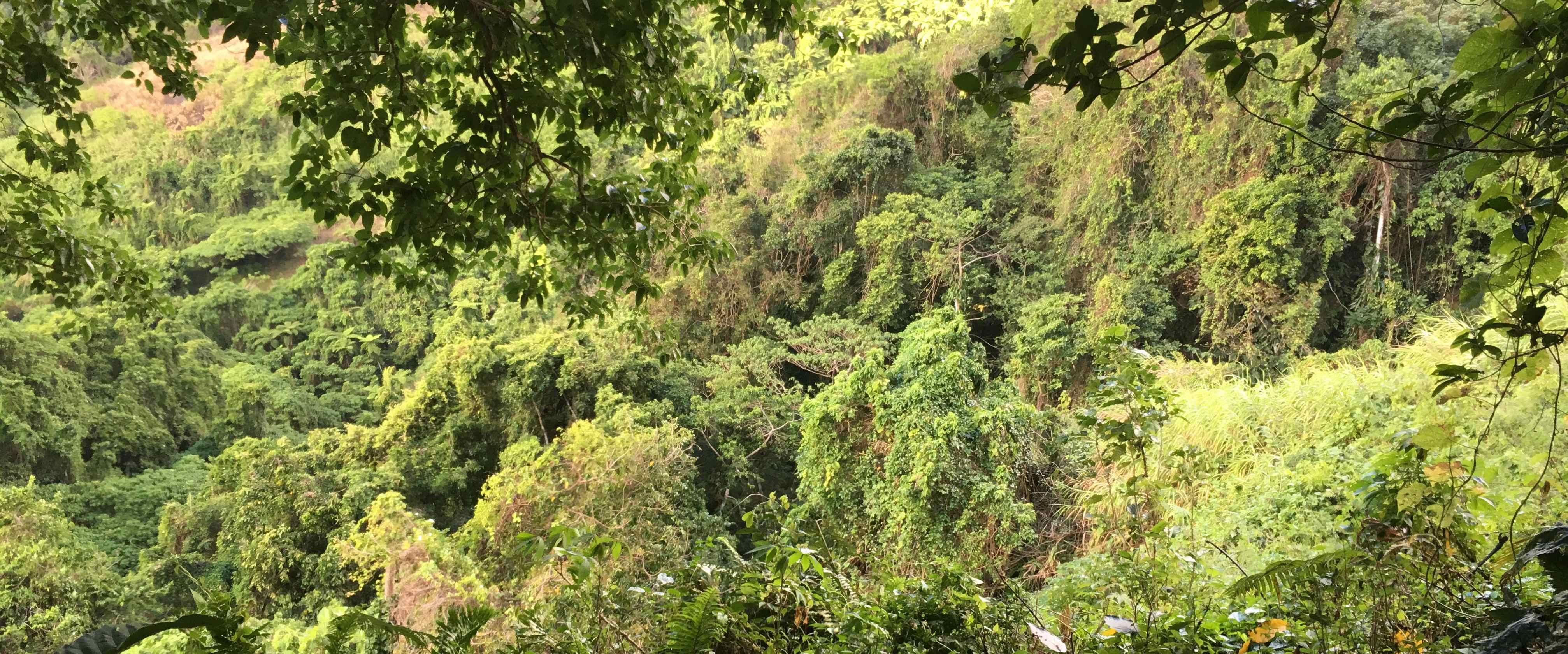
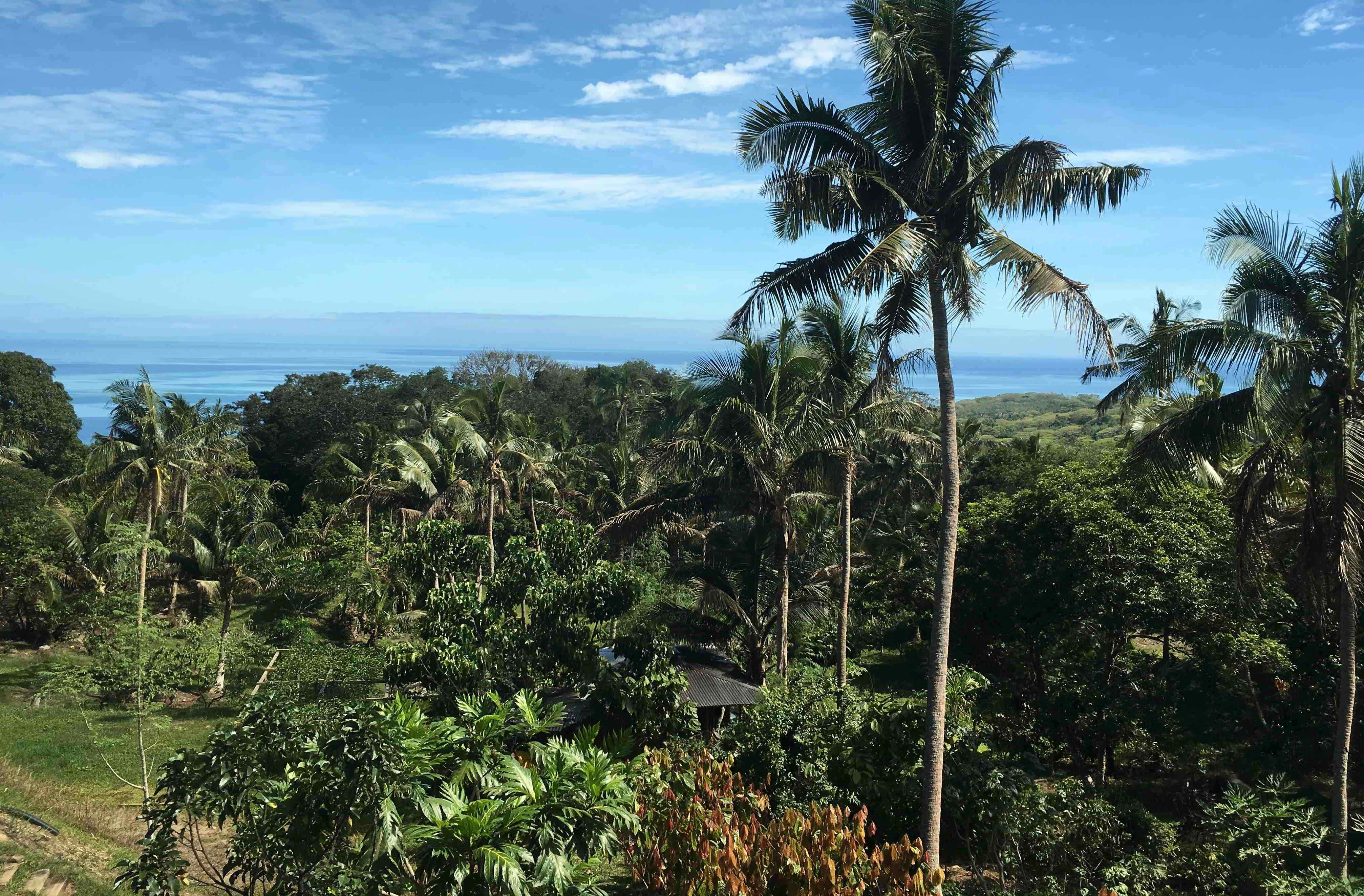
Koro Island rain forest 3 months before Cyclone Winston While comprehensive data on the damage is still being collected, initial estimates indicate varying levels of destruction, with up to 100 per cent of buildings destroyed on some islands. Hundreds of schools have been damaged or destroyed, health facilities have been severely damaged and the agricultural sector faces a total loss of some $56 million. "Almost no part of our nation has been left unscarred, and many of our rural and maritime areas bore the brunt of Winston's fury," said Nazhat Shameem Khan, Fiji's Permanent Representative to the UN in Geneva. On Koro Island alone, more than 3,000 people were left homeless, with 21 per cent of livestock dead and any crop yield made impossible. "This is a loss of catastrophic proportions for Fiji, and the immediate loss will be followed by a longer term loss to Fiji's economic and social growth," Mr. Khan said. "We have suffered a terrible blow to infrastructure, health, education, and agriculture. It is a blow which will take us years to recover from. The moment is now, for our friends to stand by the people of Fiji." Virtually every leaf has been stripped from every tree on Koro.
Fiji Times - March 01, 2016
ABC.net.au - March 03, 2016 (Australian Broadcasting Corporation)
"When we reach these villages we're discovering that some have been totally destroyed, or up to 90 per cent of the houses have been destroyed," he told the ABC's Pacific Beat, adding that "the most urgent need is to provide emergency shelter. As you travel around the region you find they're staying with friends and relatives. So those villages where a few houses have survived they're staying with neighbors, then returning to their homes during the day to rebuild." The United Nations said on Wednesday that 120,000 Fijians were in urgent need of shelter, and the country's National Disaster Management Office (NDMO) has noted that 960 evacuation centres are open.
Fiji Sun - March 05, 2016
"There is no need for a memorandum of approval from the Ministry of Health and Medical Services to travel to Koro or any other destination. Instead, the Ministry wishes to advise that people must realize the extent of damage to the island which can put people's health at risk. People need to plan well and take precautionary measures while visiting the affected areas."
www.fbc.com - March 12, 2016 (Fiji Broadcasting Corporation)
www.fbc.com - March 19, 2016
Fiji Sun - March 30, 2016
A spokesperson from the Australian High Commission confirmed that schools on Koro Island reopened on March 14,” referring to six primary schools and one high school that had been repaired. The ADF completed a total of 52 engineering tasks on the island including the provision of power to four villages, water facilities to 700 people, construction of temporary shelters, repairs to plumbing and drainage, and assessing and repairing two medical centers. They assisted with debris clearance which enabled the Republic of Military Forces to establish temporary shelters using reclaimed timber, roofing iron and tarps. The ADF also delivered humanitarian supplies to Koro Island provided by the Australian Government. This included: 1156 Tarps; 910 Hygiene Packs; 650 Shelter Kits; 27,227 Food Packs; 1350 sleeping mats; 432 bed nets; 216 kitchen kits; 64,000 aqua tabs for water purification; 40 Oxfam buckets; and 312 tents.
Fiji Times - April 5, 2016
"We are funded and sent by the Swedish Government to work under UNDP to support the technical side of debris clearing and waste management work regarding Severe Tropical Cyclone Winston recovery," Mr. Radwan said. "We are working in support of the youths from the ministry who are on the island helping the villagers clear what was left behind by the natural disaster. "We tell them how important it is to wear the protective gear for their personal hygiene and safety. We also provide them with the basic tools like wheelbarrows, shovels and wire-cutters to help ease the workload." 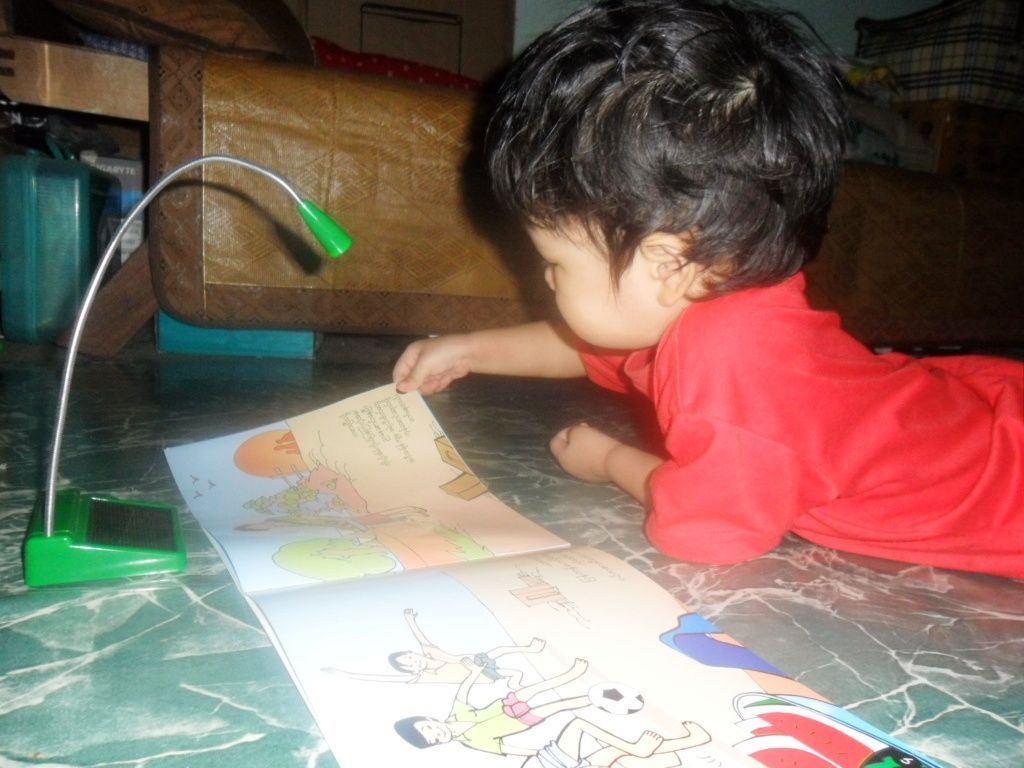
Ms. Anderson added the positive response from the villagers had made the work progress faster. "Even the women are helping out clearing their communities, carrying the same heavy load as the men, so we saw how they were eager to rebuild their lives." * * * UNITE TO LIGHT donated 100 solar powered lights to Fiji soon after Cyclone Winston as part of Direct Relief International's first shipment. Direct Relief has delivered and distributed 10 tons of specifically requested emergency medicines and medical supplies to Fiji since February 20. Another shipment of three dozen solar lights were packed by Dawn O'Bar, President of Unite To Light, and distributed by Kelly Durkin in April to villages on Koro Island, where power was lost after the storm. The lights allowed children to focus on their studies at night when electricity was not available, and enabled the villages to function after dark. Most of the islanders are still living in temporary housing as plans are developed to rebuild villages to withstand future storms.
Wrath of Winstonby VOUfiji
Radio New Zealand - August 22, 2016
Koro Islanders forage to survive post-Winston Fiji Red Cross Disaster Officer, Itu Josaia, said people weren't going hungry despite receiving their last lot of food rations in May. The islanders were not waiting for timber and other supplies to arrive. Villagers from Nasau, one of the island's 14 villages, were using a portable sawmill to mill their own wood for the 100 homes they wanted to rebuild. At least 30,000 homes were damaged by Winston. More than a third of the houses on Koro were completely destroyed. There has been a long wait for hardware, so the villagers have taken the matter into their own hands. "Everything's being done manually," Mr Josaia said, "people dragging rocks with their bare hands, just using a rope."
Fiji News - August 23, 2016
Australia to rebuild schools on Koro The school rebuilding program will be funded by Australia's $53 million package of assistance to Fiji following the Cyclone. It will include Koro High School and several primary schools on Koro, including Nasau District School. Slow Recovery on Koroby Edyta Materka
FijiTimes Online - October 20, 2016
With the next cyclone season upon them, a majority of people on Koro are still living under Australian Aid tents that are wearing thin and will provide even less protection. A far weaker cyclone will put their lives at risk. Moreover, without access to building material, reconstruction has stagnated and villagers in tidal wave zones are reluctant to leave mataqali land for the Government relocation sites on higher ground. Corruption in the distribution of contributions is an undercurrent in every post-disaster country, but usually not to the point where little to no aid reaches an entire island. Where has all the aid gone? Koro still looks like a war zone. For many weeks, All Hands Volunteers constructing temporary toilets was the only major aid presence on the island. Where did the contributions go? I received mixed responses: silences, shrugs, arguments that the Koro people are actually the wealthiest Fijians because they live off their bountiful land, or that blamed the people of Koro for their own dire condition. No one wants to be held accountable for the massive aid vacuum that has caused a second humanitarian disaster on Koro. The people of Koro live in everyday crisis. They are patiently waiting for construction material but with growing frustration over the delays. Time is running short. The next cyclone season is upon them. The housing and medical crisis is continuing, malnutrition has been only temporarily curbed, and some fear a possible dengue fever outbreak. If measures are not taken, a weak cyclone will surely amplify the Koro crisis. The Koro crisis is a human tragedy but also an opportunity for Fijians to come together to reflect, mobilize, and reinvent themselves as a people and nation. Edyta Materka is a volunteer with All Hands Volunteers One in Four have Left Koro Islandby Sikeli QounadovuFijiTimes Online - October 26, 2016 More than 25 per cent of Koro islanders have left the island in search of better lives after Severe Tropical Cyclone Winston devastated the island in February, a The Fiji Times survey revealed. Nine hundred and eighteen of the 3579 people who used to live on the island have moved away in search of better education, employment opportunities and better lives.
Naqaidamu Village chairman Niko Komairavoka said they feared that all villagers could soon leave for Suva if assistance to the village was inconsistent. Namacu Village headman Waisale Tuimaloku said everyone was working together in rebuilding the village. "Whatever we have we share and we are grateful with what we have right now." More than 100 villagers from Namacu are now in urban areas. At Nakodu Village, village headman Alipate Tiko said there was fear that everyone could soon leave the village. "We are running low on food, and I fear the village may soon be occupied only by ghosts." Survivor Didn't Realize She Was Naked, Soakedby Selita Bolanavanua, SuvaFiji Sun Online, Feb. 21, 2017 A 76-year-old woman yesterday described how she crawled naked to the mountain, Delai Dokidoki, on Koro Island one year ago. Karalaini Tumouta, said Tropical Cyclone Winston was so strong that it ripped apart her clothes. She was in tears as she recounted her experience. Stones and branches were falling and some fell around her. "I could feel the stones and rocks sliding to the grounds, I didn't want to look back as I was just focusing on staying alive," she said. "I was all alone climbing that mountain for almost five hours." She said that when she finally reached the top of the mountain, she could feel that she was all naked. "My clothes were ripped off by the wind," she said. At the top, she then tried to reach the Nasau Health Center. She said she couldn't walk anymore, as she was very weak, so she crawled. "I crawled to the hospital which was few kilometers away, all I wanted was to reach the hospital alive," she said. Mrs. Tuimouta said when she reached the hospital, some of the villagers were there, wet and naked too. "Some of them had no clothes on at all, so we were given the hospital white sheets to cover ourselves," she said. "Many were wet and shivering till the next morning." She said that while at the hospital she found out about her four-year-old granddaughter Vitinia Lolo's death. "The Lord saved me that night," she said.
Today is Monday September 28, 2026
Please contact us by email.
|
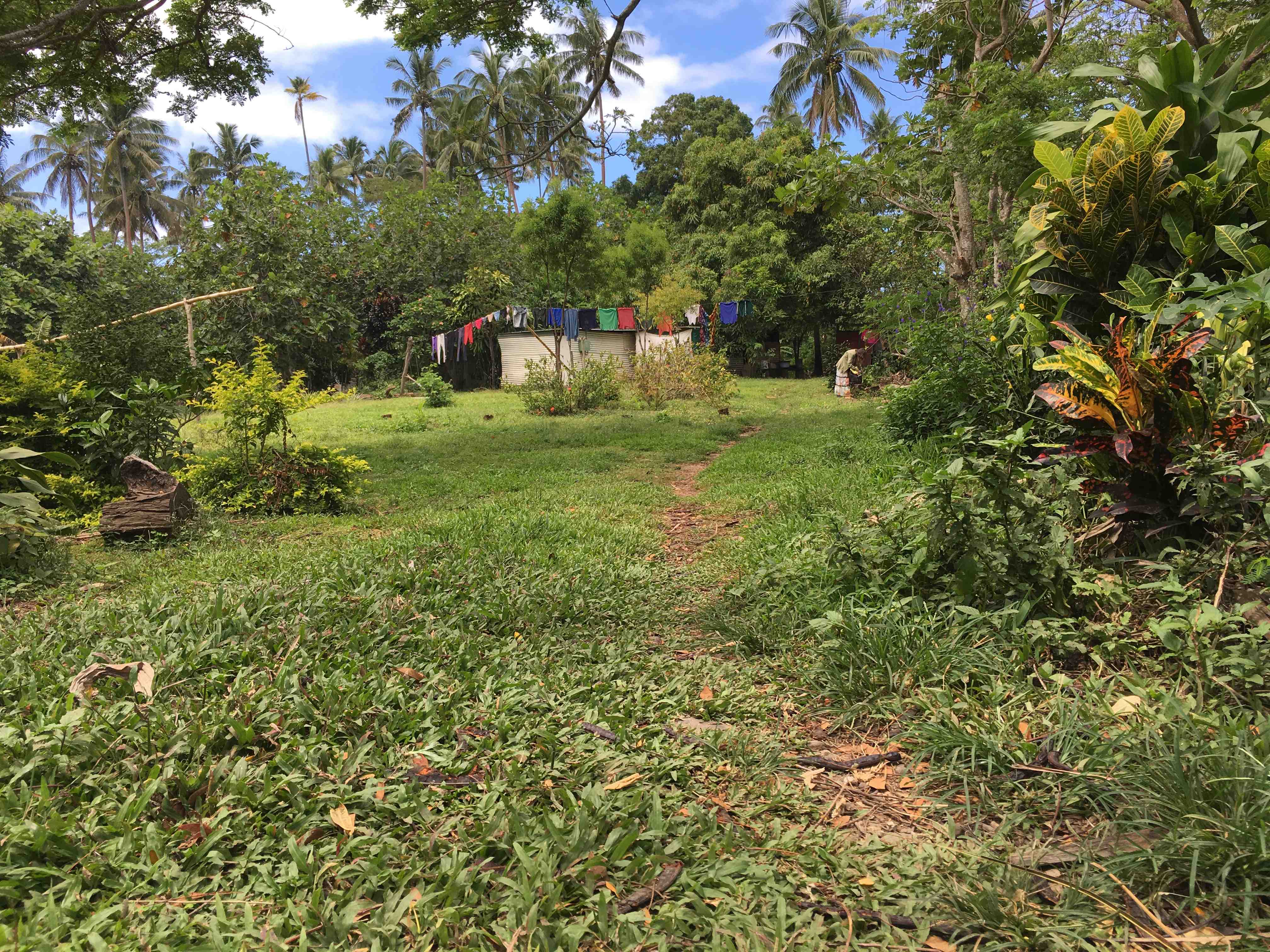
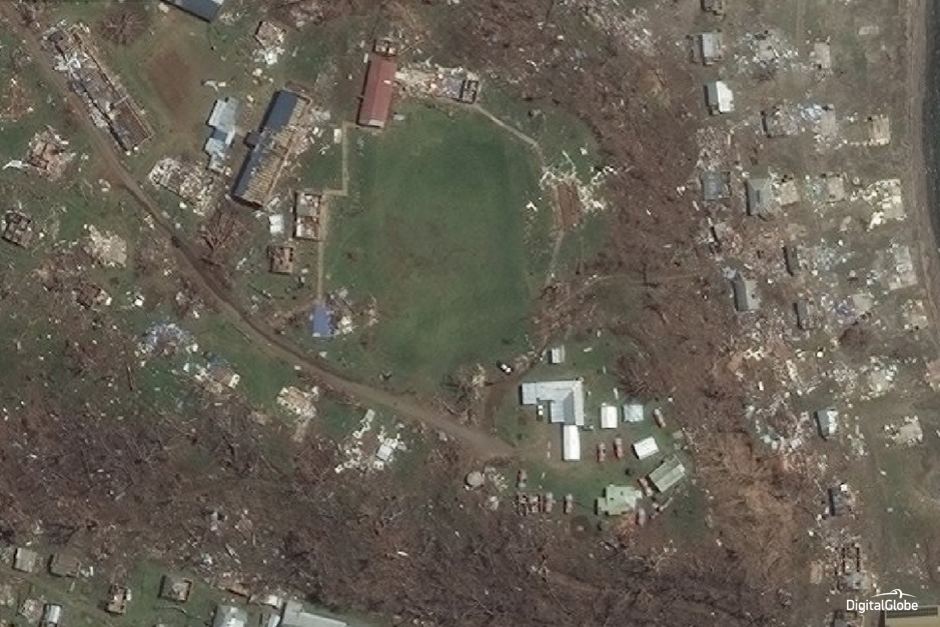
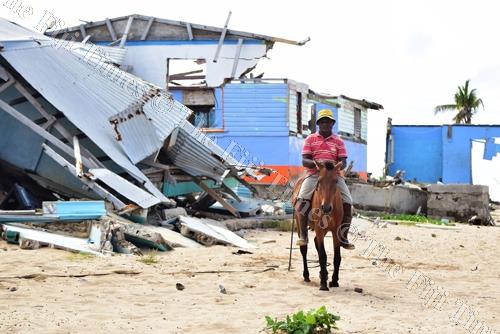 The monster cyclone not only destroyed their homes and farms, but also their dreams and aspirations. At Naqaidamu, Namacu and Sinuvaca, more than half of the villagers have left for Suva because there is nothing on the island that they can fall back on. Those who have left relied heavily on their farms and with nothing to fall back on, they have made the toughest decision to look for employment in urban centers in order to provide the basic necessities for their families.